31st January 2025- Graceful Graham's Block Balance Answer the maths questions and then carefully time your jumps to help Graham climb as high as possible.
13th December 2025- Otto's Log Dodge. Help Otto cross the river, collect coins, and avoid the logs.
26th August 2025- Maths Lumberjack. Chop down the tree as quickly as possible without hitting your head.
7th May 2025- Planet Jump. Carefully time your jumps between the planets.
30th April 2025- Alpine Adventure. Guide the skier safely down the slope.
16th January 2025- Rubbish Game. Collect as much ocean rubbish as possible.
27th August 2024- Princess Penguin's Jewel Jaunt. Answer the maths questions and then help the Princess past the obstacles.
7th February 2024- Boxy Bird. Answer the maths questions and then guide your bird safely home.
6th October 2023- Run Pineapple Run. Answer the maths questions and then run to avoid the chompers.
10th June 2023- Tower Block - Balloon Blast. Blast the balloons and avoid the explosives.
26th June 2022- Parachute Multiplication Answer the multiplication question and then try and land on the correct answer. You will need to carefully read the scale on the number line.
19th February 2022- Maths Choppity Chop Chop the vegetables while avoiding the steel bar and the saw.
1st December 2021- Angry Andy Must Have Candy Answer the maths questions and then scoop up as much candy as possible in an attempt to placate the hungry monster.
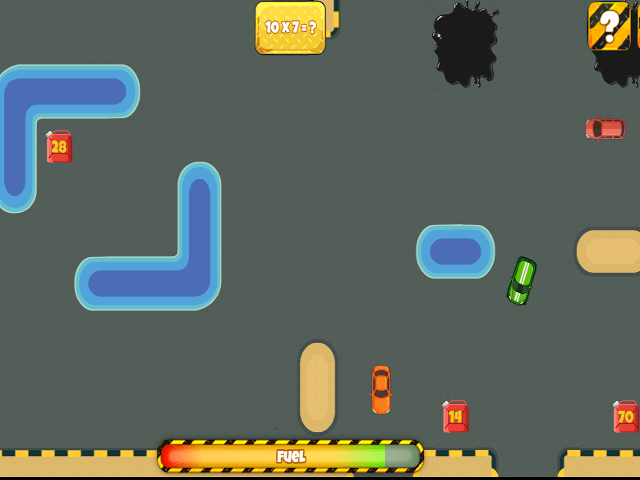
25h October 2021- Maths Climber Drive your car as quickly, and carefully, as you can to avoid crashing.
12th May 2021- Caterpillar Carnage Guide the caterpillar through the smallest numbers to keep your run going.
21st March 2021- Maths Fairground Shoot Use your maths skills to earn time in the game and see how many ducks you can shoot.
4th March 2021- Balancing Calculations Find the missing number to balance the calculations. An excellent tool for reinforcing an understanding of the role of the equals sign.
17th December 2020 - Finding Difference using a Number Line Find the difference between two numbers by counting on from the smaller number to the larger number.
8th November 2020 - Numbers on a Venn Diagram - Missing Labels Look at the numbers in the Venn diagram and then select the correct labels.
14th October 2020 - Hundred Square
18th September 2020 - Compare Numbers using Dienes
3rd September 2020 - Birds V Robots Maths Game Help the birds defend their eggs from the evil robots by answering the maths questions correctly.
1st September 2020 - Multiplication Tile Crash Break through the tomb wall with your multiplication knowledge.
6th August 2020 - Multiplication Miner Find the two factors to make a given product.
25th June 2020 - Parachute Number Line Land on a given number on the number line.
27th April 2020 - Crossroads Chaos Tap on a car to speed it up and try and avoid crashing.
9th April 2020 - Snowball Smash Answer the maths questions and then see how many opponents you can defeat in a snowball fight.
30th March 2020 - Maths Tower Construction Answer the maths questions and then build as tall a tower as you can.
5th March 2020 - Dienes - Identify and Represent Numbers Choose to either identify the number shown by dienes or represent a given number using dienes. Choose 'Game Mode' and you will be rewarded for correct answers in a penalty shoot out.
21st February 2020 - Defend the Tree Answer the maths questions then stop the critters from stealing the fruit.
10th December 2019 - Animal Sorting - Maths Game Answer the maths questions then sort the animals as quickly as you can.
3rd December 2019 - Match the Wall - Maths Game Slow the wall by answering maths questions then move your block to match the wall.
1st December 2019 - Maths Colour Match Answer the maths questions then launch the spaceships at their matching colour.
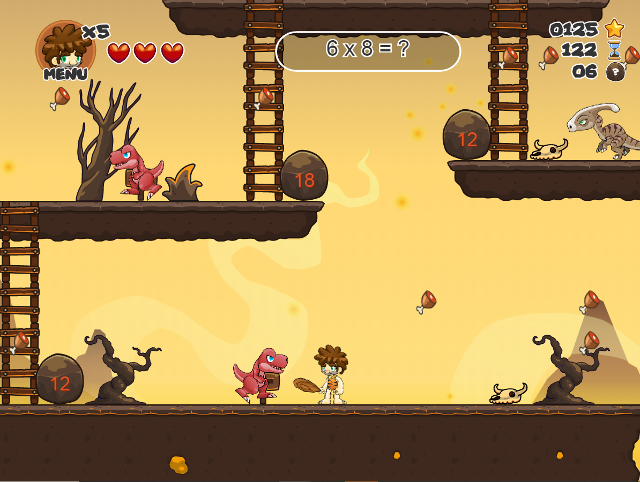
16th November 2019 - Stone Age Stu - Times Tables Use your club to select the correct answers and defeat the dinos in this action packed platformer.
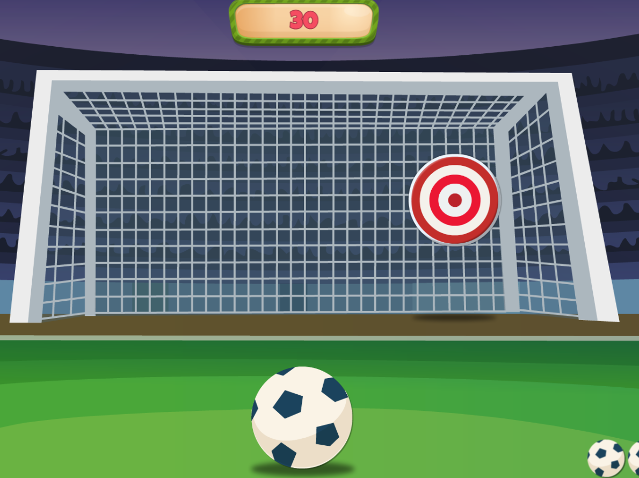
12th October 2019 - Maths Penalty Shoot Out Answer the maths questions quickly and accurately to get more penalties.
Hundreds of maths skills to choose from with levels involving multiplication, division, addition, subtraction, reading numbers, rounding numbers, reading Roman Numerals, fractions of numbers, simplifying fractions and converting between fractions, decimals and percentages..
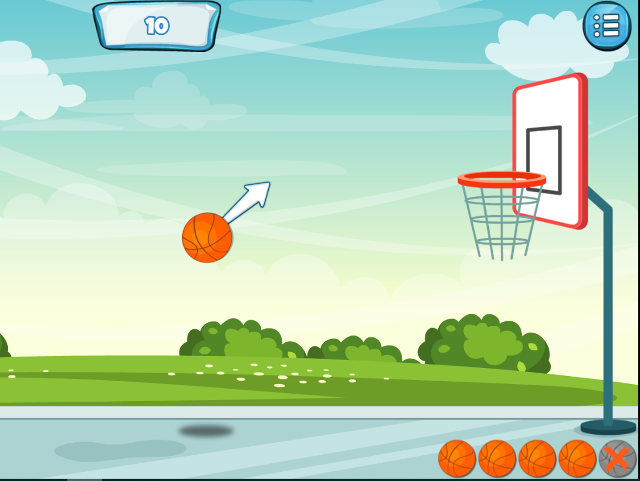
3rd October 2019 - Basketball Maths Answer the maths questions quickly and accurately to earn basketballs and then see how many points you can score.
Hundreds of maths skills to choose from with levels involving multiplication, division, addition, subtraction, reading numbers, rounding numbers, reading Roman Numerals, fractions of numbers, simplifying fractions and converting between fractions, decimals and percentages..
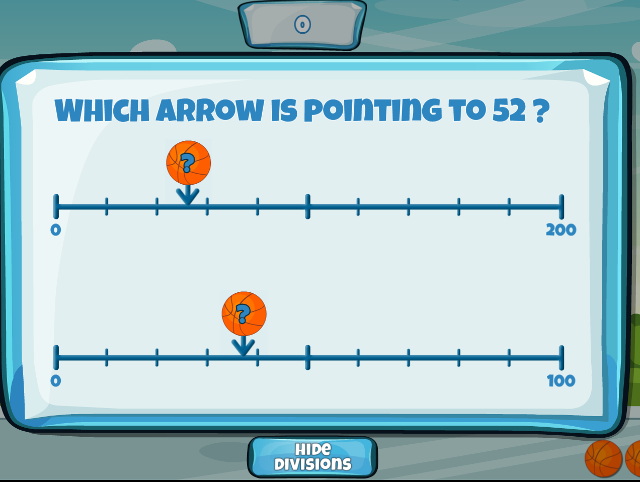
25th September 2019 - Number Line Basketball Look carefully at the scales of the two number lines and decide which arrow is pointing to the given number. The more correct answers you get, the more shots at the basket.
18th September 2019 - Rounding - Mini Maths Golf round the numbers and then see if you can get a hole in one. Other variants coming soon.
18th July 2019 - Multiplication - Guard the Garden shoot the bubbles with the correct answer before they reach the flower.
7th June 2019 - Number Bonds Check uses the same format as the 'Multiplication Tables Check'. It tests recall of number bonds to 10, 20, 50, 100 or 1000 or decimal bonds to 1.
15th April 2019 - Maths Road Hopper- Multiplication - answer the questions quickly to slow the traffic then try and cross as many roads as you can. Other maths versions and spellingframe version will be added shortly.
15th March 2019 - Mini Maths Machines - Multiplication
14th February 2019 - Super Maths Bowling - Multiplication
20th January 2019 - New tablet friendly version of ITP Number Spinners
6th January 2019 - New tablet friendly version of ITP Ratio and Proportion
31st December 2018 - New tablet friendly version of ITP Data Handling
21st December 2018 - New tablet friendly version of ITP Twenty Cards
4th December 2018 - New tablet friendly version of ITP Counting
27th November 2018 - Y6 Arithmetic Practice is an online quiz that uses questions adapted from the Year 6 Arithmetic test. There are hundreds of potential questions drawn from previous tests.
25th November 2018 - New tablet friendly version of ITP Difference
24th November 2018 - New tablet friendly version of Snake - KS2 Maths Game
18th November 2018 - New tablet friendly version of ITP Line Graph
13th November 2018 - Multiplication Tables Check mirrors the test that is to be taken at the end of Year 4.
9th November 2018 - New tablet friendly version of ITP Number Scales
7th November 2018 - Maths Maze Monsters - Addition Answer the questions correctly so you can eat your opponent and steal their points. Play in one player or two player mode.
6th November 2018 - Multiplication Coordinates - Alien Attack. Thwart the alien invasion using your knowledge of multiplication and coordinates. Choose coordinates in the first quadrant or all four quadrants.
5th November 2018 - New tablet friendly version of ITP isogrid
4th November 2018 - Maths Maze Monsters - Rounding Numbers Answer the questions correctly so you can eat your opponent and steal their points. Play in one player or two player mode.
4th November 2018 - Angle Alien Attack. Stop the aliens attacking Earth by reading the angles on the protractor (or estimating them without a protractor).
2nd November 2018 - Coordinates Alien Attack. Thwart the alien invasion using your knowledge of coordinates. Choose coordinates in the first quadrant or all four quadrants.
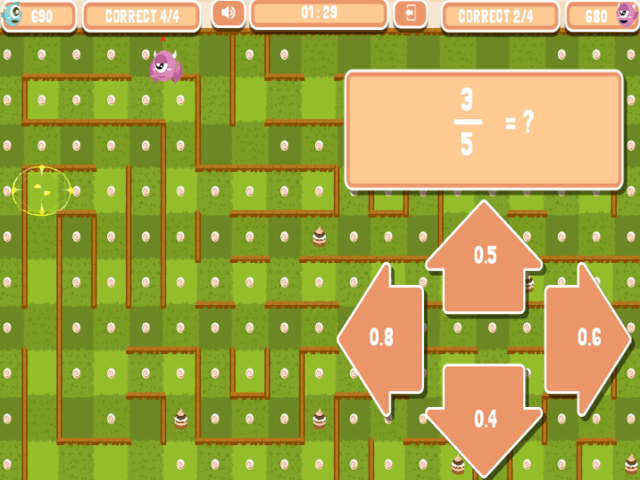
25th October 2018 - Maths Maze Monsters - Multiplication Answer the questions correctly so you can eat your opponent and steal their points. Play in one player or two player mode.
23rd October 2018 - New tablet friendly version of ITP Multiplication Facts
18th October 2018 - New tablet friendly version of ITP Calculating Angles
5th October 2018 - Jetpack Mathematics - Addition Guide the spaceman to the correct answers.
4th October 2018 - Parking Maths - Division. Steer your car to the parking place with the correct answer.
28th September 2018 - Jetpack Mathematics - Roman Numerals Guide the spaceman to the correct answers.
27th September 2018 - New tablet friendly version of ITP Area
23rd September 2018 - New tablet friendly version of ITP Polygon
22nd September 2018 - Jetpack Mathematics - Multiplication Guide the spaceman to the correct answers.
18th September 2018 - New tablet friendly version of ITP Beadstring
10th September 2018 - Parking Maths - Subtraction. Steer your car to the parking place with the correct answer.
8th September 2018 - New tablet friendly version of ITP Number Line
4th September 2018 - Parking Maths - Reading Numbers. Read the number written in words and park in the correct space.
2nd September 2018 - New tablet friendly version of ITP Fixpoints
23rd August 2018 - Parking Maths - Rounding Numbers. Steer your car to the parking place with the correct answer.
22nd August 2018 - New tablet friendly version of ITP Grid Multiplication
9th August 2018 - New tablet friendly version of ITP Remainders after Division
8th August 2018 - Parking Maths - Addition. Steer your car to the parking place with the correct answer.
7th August 2018 - New tablet friendly version of ITP Number Dial
4th August 2018 - Parking Maths - Multiplication. Steer your car to the parking place with the correct answer.
1st August 2018 - New tablet friendly version of ITP Place Value
24th July 2018 - New tablet friendly version of ITP Grouping
23rd July 2018 - New tablet friendly version of ITP Number Facts
22nd July 2018 - New tablet friendly version of ITP Number Grid
11th July 2018 - Archery Arithmetic - Reading Numbers. Read the numbers written in words.
9th July 2018 - New tablet friendly version of ITP Multiplication Array
6th July 2018 - New tablet friendly version of ITP Measuring Scales
6th July 2018 - Archery Arithmetic - Roman Numerals. Read the numbers written in Roman Numerals as quickly as possible to get more time to aim your arrow.
3rd July 2018 - New tablet friendly version of ITP Clock
28th June 2018 - Archery Arithmetic - Rounding Numbers. Round numbers as quickly as possible to get more time to aim your arrow.
25th June 2018 - New tablet friendly version of ITP Ruler
23rd June 2018 - New tablet friendly version of ITP Fractions
22nd June 2018 - New tablet friendly version of ITP Decimal Number Line
21st June 2018 - Archery Arithmetic - Multiplication. Answer the multiplication questions as quickly as possible to get more time to aim your arrow.
17th June 2018 - UFO Maths. Shoot the UFO with the correct answer. Over 100 levels linked to objectives from the curriculum from Year 1 to Year 6.
15th June 2018 - New tablet friendly version of ITP Thermometer
12th June 2018 - Marlon's Magical Math Mission - Convert Fractions to Decimals
10th June 2018 - New tablet friendly version of ITP Measuring Cylinder
6th June 2018 - Marlon's Magical Math Mission - Reading Numbers
5th June 2018 - New tablet friendly version of ITP Symmetry
30th May 2018 - Marlon's Magical Math Mission - Roman Numerals defeat the evil critters using your knowledge of Roman numerals.
26th May 2018 - New tablet friendly version of ITP Coordinates
22nd May 2018 - Marlon's Magical Math Mission - Rounding defeat the evil critters using your knowledge of rounding.
19th May 2018 - I am remaking the old ITPs to make them tablet friendly. The first ones to be remade are ITP Moving Digits and ITP Beadsticks
15th May 2018 - Marlon's Magical Math Mission - Multiplication defeat the evil critters using your multiplication skills.
7th May 2018 - A new tablet friendly version of Coordinates - Reasoning about Position and Shape
2nd May 2018 - Maths Dodge: Roman Numerals collect the squares with the numbers that match the Roman Numerals.
17th April 2018 - Maths Dodge: Multiplication collect the squares with the answers to the multiplication questions.
5th April 2018 - Tower of Mathematics - Convert Fractions to Decimals build the tower by converting fractions to decimals.
4th April 2018 - Tower of Mathematics - Multiplication build the tower by answering multiplication questions.
27th March 2018 - A new tablet friendly version of Monty's Maths Wall
12th March 2018 - A new tablet friendly version of Different Ways to Pay
8th March 2018 - A new tablet friendly version of Fixed Number of Coins
27th February 2018 - A new tablet friendly version of Fewest Coins
21st February 2018 - I have added two new tablet-friendly games: Missing Digits - Column Addition and Snowboard Slalom
14th February 2018 - I have added a new tablet friendly version of KS2 Maths Invaders
7th February 2018 - Tommy's Trek - Division and a new tablet friendly version of Using a Calendar
3rd February 2018 - Tommy's Trek - Fractions of Numbers , Tommy's Trek - Percentages of Numbers and Maths Race - Decimals.
2nd February 2018 - Tommy's Trek - Simplify Fractions . A fun platform game for children to practise expressing fractions in their simplest form and Tommy's Trek - Rounding Numbers
1st February 2018- A new tablet friendly version of Find the Start Time and Maths Race - Convert Fractions to Decimals.
28th January 2018- Maths Race - Convert Fractions to Percentages. Steer your car to select the percentage that matches the fraction.
27th January 2018 - Tommy's Trek - Reading Numbers . A fun platform game for children to practise reading numbers.
25th January 2018- A new tablet friendly version of Telling the Time in Words
25h January 2018- Maths Race - Rounding Numbers. Round numbers to the nearest 10, 100 or 1000 or round decimals to the nearest whole, 1dp or 2dp. Will work on any device.
24th January 2018- All of the Crystal Crash games have been updated so that they can be played in the browser of any device without the need of an app.
23rd January 2018- A new tablet friendly version of Telling the Time
21st January 2018- Maths Race - Fractions of Numbers. Steer your car to select the numbers that match the fractions of numbers and Maths Race - Reading Numbers read the numbers in words and select the correct numerals.
20th January 2018- Two new version of Tommy's Trek - Roman Numerals and Addition
20th January 2018- Multiplication - Crystal Crash. A new tablet frielndly version of the game. Throw your pickaxe at the correct answer. Lots of choice of addition levels; from Year 1 to Year 6.
19th January 2018- Addition - Crystal Crash. A new tablet frielndly version of the game. Throw your pickaxe at the correct answer. Lots of choice of addition levels; from Year 1 to Year 6.
18th January 2018- Maths Race - Roman Numerals. Steer your car to select the numbers that match the Roman numerals. Will work on any device.
16th January 2018- Maths Race - Addition. Steer your car into the correct answers and avoid the hazards. Wide choice of levels taken from the addition objectives of the National Curriculum. Will work on any device.
15th January 2018- Maths Race - Multiplication. Steer your car into the correct answers and avoid the hazards. Another fun game to practise times tables. Will work on any device.
29th December 2017- Sort Numbers on a Venn diagram and Sort Numbers on a Carroll Diagram . Choose one or two criteria to sort the numbers. This updated version will work on any device.
15th December 2017- Sort 3D Shapes on a Venn diagram and Sort 3D Shapes on a Carroll Diagram . Choose one or two criteria to sort the 3D shapes. A great game to get children thinking about the properties of shapes. This updated version will work on any device.
15th December 2017- Bubble Pop - Number Bonds. A new tablet friendly version. Choose which number bonds to practise and then try and pop all the bubbles before your time is up or you run out of bubbles.
13th December 2017- Bubble Pop - Multiplication. A new tablet friendly version. Choose which times tables to practise and then try and pop all the bubbles before your time is up or you run out of bubbles.
11th December 2017- Column Subtraction.Working towards an efficent method of column subtraction. Can be used to demonstate expanded subtraction (in which the numbers are partitioned) with or without the need for borrowing. This version is tablet friendly.
9th December 2017- Dividing Fractions . Provides a visual representation to help children understand how to divide fractions. This version is tablet friendly.
5th December 2017- Sort 2D Shapes on a Venn diagram and Sort 2D Shapes on a Carroll Diagram . Choose one or two criteria to sort the shapes. A great game to get children thinking about the properties of shapes. This updated version will work on any device.
4th December 2017- Multiply and Divide by 10, 100 and 1000 . Decide which function has been applied to a number. Reinforces the effects of multiplying and dividing by 10, 100 and 1000. This new version can be played on any device.
1st December 2017- Tommy's Trek - Times Tables . A fun platform game for children to practise their times tables.
30th November 2017- Percentages of Numbers . Use a bar to help children find percentages of numbers.This version is tablet friendly and can be played on any device.
28th November 2017- Estimate Numbers on a Number Line . This version is tablet friendly and can be played on any device.
28th November 2017- Fractions of Numbers - This version is tablet friendly and can be played on any device.
23rd November 2017- A new and greatly improved version of Solve 2 Step Money Problems . This version is tablet friendly and can be played on any device.
23rd November 2017- Maths Fishing - Convert Fractions to Decimals - Choose to convert unit fractions, multi-part fractions or improper fractions.
23rd November 2017- A new version of Placing Numbers on a Number Line . This version is tablet friendly and can be played on any device.
22nd November 2017- Maths Fishing - Reading Numbers - Catch a fish and then read the number written in words.
21st November 2017- Partitioning (3) - Tablet Version - Partition a number in 5 different ways.
21st November 2017- Maths Fishing - Roman Numerals - Catch a fish and then convert Roman numerals to numbers to reel them in. This game will work on any device.
18th November 2017- A new and improved Bar Charts game . This version uses both vertical and horzontal bars and has a wider range of one step and two step questions. This game is tablet friendly and will work on any device.
16th November 2017- Maths Fishing - Rounding - Catch a fish and then answer the rounding questions to reel them in. This game will work on any device.
15th November 2017- Maths Fishing - Multiplication - Practise your multiplication while fishing. This game will work on any device.
14th November 2017- Sequences - Tablet Version - Find the correct number in a sequence. Lots of choice over level, count forwards or back, count in whole numbers, multiples of 10, multiples of 100. This version will work on an iPad or any device.
10th April 2017- Expanded Addition Using Place Value Counters - Tablet Version - A step towards a more formal written method of columnar addition using place value counters. This version will work on an iPad or any tablet.
30th March 2017- Column Subtraction Using Place Value Counters - Tablet Version - A good starting place for teaching column subtraction. Helps children to visualise the processes involved. Choose either expanded subtraction or column subtraction, with or without the need for borrowing. This version will work on an iPad or any tablet.
27th January 2017- Algebra - Balancing Scales - Provides a visual representation, using balancing scales, to help children see how to solve simple algebraic equations. .
21st January 2017- Algebra - Bar Method - Provides a visual representation, using the bar method, to help children see how to solve simple algebraic equations. .
20th December 2016- Simplify Fractions - Use common factors to simplify fractions. The fractions are then represented using rectangular arrays to help children see the relationship.
4th December 2016- Angle Drag - Drag the line to make a given angle then measure using a protractor.
3rd November 2016- Dividing Fractions - Provides a visual representation to help children understand how to divide fractions.
6th October 2016- Order of Operations - Use knowledge of the order of operations to carry out calculations involving the four operations and explore the order of operations using brackets.
26th July 2016- Monty's Maths Memory - Help Monty remember where to find the card with the correct answer. Lots of levels to play.
14th March 2016- Maths Raiders - Destroy the spaceships by answering maths questions. Lots of levels to play.
25th August2015- Monty's Maths Wall - help Monty the dog drop the bricks in the correct places. Lots of levels to play
19th April 2015- A new Android App Time Games - which has 5 time games from the website. The app will be available for iOS in a couple of weeks.
26th February 2015- Multiply simple pairs of fractions - Can be used to demonstrate the effect of multiplying one simple fraction by another.
6th February 2015- Snake - KS2 Maths Game - guide the snake to avoid the hazards and eat the correct numbers. Lots of levels to play
8th January 2015- KS2 Maths Invaders - destroy the alien invaders before they attack you. Hundreds of levels designed around the new maths curriculum.
15th November 2014 - Simplify Fractions- Mine Mayhem - shoot the fractions in their simplest form.
14th November 2014 - Factors, Prime & Square Numbers- Mine Mayhem - choose to shoot the factors of number, prime numbers, square numbers, or any combination of the three.
4th November 2014 - Shooting Multiples- Mine Mayhem - choose to shoot the multiples of any number from 2 to 12
24th October 2014 - New game Fractions of Numbers- Mine Mayhem - find the fractions of a number and then shoot the correct mine
23rd October 2014 - New game Roman Numerals- Mine Mayhem - blast the mine with the number that matches the Roman numerals
22nd October 2014 - New games Number Bonds - Mine Mayhem - use number bonds to destroy the mines and Reading Numbers - Mine Mayhem - match the numbers written in words with the correct numerals
17th October 2014 - New game Multiplication - Mine Mayhem - use times tables to shoot the mines before they hit you in this fun arcade game.
13th September 2014 - New iPad app Crystal Crash Maths - all 13 Crystal Crash games in a single app. Hundreds of levels covering objectives from Year 1 to Year 6 of the new maths curriculum.
26th August 2014 - The last Crystal Crash game (unless you can suggest another). Shoot the Fractions in their simplest form.
18th August 2014 - Another new Crystal Crash game. Shoot either Multiples, Factors, Prime, Square or Cube Numbers
10th August 2014 - Two new Crystal Crash games. Convert fractions to Percentages and Decimals
9th August 2014 - Rounding Crystal Crash and Telling the Time in Words Crystal Crash
30th July 2014 - Reading Numbers - Crystal Crash
24th July 2014 - Multiplication Crystal Crash and Division Crystal Crash
23rd July 2014 - Addition Crystal Crash and Subtraction Crystal Crash
22nd July 2014 - Multiply and Divide by 10, 100 and 1000 (3)
16th July 2014 - Roman Numerals - Crystal Crash
4th July 2014 - Comparing Numbers on a Number Line Compare the numbers on two different number lines and decide which is bigger. A great game to get children thinking about place value and reading varying scales.
27th June 2014 - Estimating Numbers on a Number Line
25th June 2014 - Crystal Crash - Fractions of Numbers
12th June 2014 - Find the perimeter of compound shapes
25th May 2014 - Use inverse operations to find a missing number - Thinking of a Number
10th May 2014 - Using a Calendar
28th April 2014 - Find the Mean, Median, Mode and Range of a set of cards
3rd April 2014 - Multiply Fractions
30th March 2014 - Convert Measurements Dominoes Convert between: millimetres and centimetres, centimetres and metres, metres and kilometres, minutes and hours, minutes and seconds, grams and kilograms and millilitres and litres.
21st March 2014 - Formal Written Division - Round Up or Down? Answer word problems using either long division or short division and then round the answer up or down depending on the context.
14th March 2014 - Long Division - Formal Written Method
27th February 2014 - Short Division - Formal Written Method
21st February 2014 - Addition and Subtraction Dominoes Answer addition and subtraction questions to arrange the dominoes as quickly as possible. Lots of choice over level.
18th February 2014 - Bubble Pop - Number Bonds is a fun game to help children to learn their number bonds and get quicker at mental addition. iPad and Android versions will be avalable soon.
12th February 2014 - I have updated Multiplication - Written Method.
11th February 2014 - I have updated Column Addition.
7th February 2014 - I have updated Expanded Addition.
25th January 2014 - Dominoes: Match Fractions, Decimals and Percentages.
24th January 2014 - Roman Numerals Dominoes.
22nd January 2014 - Multiplication Dominoes.
13th January 2014 Telling the Time Dominoes.
3rd January 2014 - Bubble Pop - Multiplication. A fun game to help children to learn their multiplication tables.
22nd December 2013 - Fraction Dominoes
4th December 2013 - Column Subtraction using Place Value Counters
23rd November 2013 - Expanded Addition using Place Value Counters
6th November 2013 - Add fractions with the same denominators
1st November 2013 - Add and subtract fractions with different denominators
20th October 2013 - Perform a calculation using the calculator and then round your answer to the nearest 10, 100, whole number or decimal with 1, 2 or 3 decimal places.
14th October 2013 - Use the inverse operation to solve multiplication and division questions with a calculator.
3rd October 2013 - I have added a new game that helps children to visualise the relationship between addtion and subtraction.
24th July 2013 - I have added a new game which involves finding the - surface area of 3d shapes
5th July 2013 - I have added a new and improved version of the grid method multiplication resource. It now includes more levels and a scoreboard.
21st June 2013 - Find the missing angles in a triangle, around a point, in a quadrilateral, find opposite and supplementary angles, or find angles which require multi-step problem solving skills.
21st June 2013 - An ipad version of Number Facts - Beat the Clock is now available.
11th June 2013 - Give the probability of an event on a number spinner, or compare the probabilty of an event on two different number spinners and say which is more likely.
30th May 2013 - I have updated the Number Facts - Beat the Clock game. You can now choose multiple objectives, or objectives grouped by national curriculum level. A very versatile game.
22nd May 2013 - I have updated the column subtraction game and shall be adding some new levels shortly.
11th May 2013 - I have now updated all 4 of my time games so that they all include a scoreboard.
8th May 2013 - I have updated my telling the time game to include a scoreboard, so you can track progress over time.
30th April 2013 -Drag the missing symbols to the correct position to make the number sentence correct.
19th April 2013 - Convert improper fractions to mixed numbers
15th April 2013 - The iPad version of placing numbers on a number line is now available.
2nd April 2013 - Express a quantity as a percentage of another choose number, word or shape problems.
26th March 2013 - I have redesigned an existing game - placing numbers on a number line - which will be available as an ipad app soon
23rd March 2013 - Use beadstrings and a number line to explore the difference between 2-digit numbers
6th March 2013 - Answer word problems involving ratio and scaling numbers using multiplication and division.
24th February 2013 - Added another new calculator game - use brackets to order operations
21st February 2013 - Added a new game - find fractions of numbers using a calculator. I also added a new category for all my new calculator games
19th February 2013 - Answer division word problems using a calculator and decide whether the answer needs to be rounded up or down depending on the context of the question.
6th February 2013 - Using a calculator - finding change can be used to demonstrate to children how to use a calculator as it records all the calculations as the keys are pressed.
17th January 2013 - I am really proud of this new game - 'Coordinates - reasoning about position and shape' - I think it will work well for developing children's thinking about shape and position.
6th January 2013 - I have added 2 free ipad apps for sorting numbers on Carroll and Venn diagrams.
1st January 2013 - There are now 7 ipad apps available. I shall be adding more in the next couple of weeks.
30th November 2012 - Find percentages of numbers and money.
21st November 2012 - Find a number when given a fraction of that number.
16th November 2012 - Use a fraction bar to help to visualise fractions of numbers.
3rd November 2012 - Shade a fraction of an amount.
29th October 2012 - Identify the errors on a Carroll diagram used to sort numbers.
28th October 2012 - Identify the errors on a Venn diagram used to sort numbers.
23th October 2012 - 2d shapes on a Carroll diagram with missing labels.
19th October 2012 - Order the fractions decimals and percentages.
17th October 2012 - Drag the labels to the correct position on a Carroll Diagram. Great for reasoning about numbers and their properties.
13th October 2012 - Drag the digit cards to make the decimal closest in value to a given number.
11th October 2012 - Added a new game which encourages lots of thinking about place value.
4th October 2012 - Compare fractions with other fractions, decimals or percentages
2nd October 2012 - Children are given a range of coins and have to work out how much more money is needed to make a given amount. A number line is shown to support their thinking.
30th September 2012 - Drag the digit card to make the equivalent fractions
19th September 2012 - Added a new game which represents multiplication using an array and a number line
18th September 2012 - Solve 2 step problems using pie charts.
16th September 2012 - Interpret Pie Charts and answer word problems.
6th September 2012 - Adding Money - Digit Drag a challenging game in which you need to drag the digit cards to make a given amount of money
2nd September 2012 - Read the scales on measuring cylinders and answer a variety of word problems.
23rd August 2012 - Addition - Digit Drag and Adding Decimals - Digit Drag in which you must drag the digits to make a given sum.
11th August 2012 - Read a variety of numbered and partially numbered scales. Measure mass, capacity and temperature.
9th August 2012 - Added an activity to help children to visualise number bonds using base ten blocks and a number line.
1st August 2012 - Recognise and continue sequences involving fractions, colours and shapes
19th July 2012 - Recognise and continue sequences involving colour, shape and numbers.
11th July 2012 - Match fractions, decimals and percentages.
6th July 2012 -Find the start time for a given time interval.
28th June 2012 -Adding Time - Word Problems. Read the time on either an analogue or digital clock and then answer a word problem involving adding a given time.
16th June 2012 - Tell the time in words using language such as 'half past' and 'quarter to'.
14th June 2012 - Read the time on an analogue clock. Lots of choice over levels, including: reading time to the nearest hour, half hour, quarter hour, five minutes or minute. Telling the Time.
5th June 2012 - Added 'Sorting 3D shapes on a Venn Diagram'. Sort the 3D shapes according to their properties, such as prisms, pyramids, number of vertices, edges or faces.
4th June 2012 - Added 'Sorting 3D shapes on a Carroll Diagram'. Sort the 3D shapes according to their properties, such as prisms, pyramids, number of vertices, edges or faces.
10th May 2012 - Added 'Add and Subtract on a Number Line' in which near multiples are added and subtracted on a number line
11th March 2012 - Added 'Adding Several Numbers' in which you must find 3 or 4 numbers that will add to make a given total.
25th February 2012 - Added 'Balancing Calculations' in which you have to find the missing number in a calculation to make the scales balance. Great for exploring the role of the = sign. I have tried to include all Primary Framework mental maths objectives. I shall be adding a few more levels in the coming weeks.
2nd February 2012 - Added two resources to help teach division by chunking. 'Division by chunking down' can be used to explore division as repeated subtraction and 'Division by chunking up' as repeated addition.
15th January 2012 - Added 'Balance scales - add, move or remove a weight' a great starter activity which requires that you balance the scales by either adding a weight, moving a weight from one pan to another, or by removing a weight. Involves lots of problem solving skills and mental addition and subtraction strategies.
12th January 2012 - Added 'Different ways to pay' in which you explore different ways to make the same amount of money using draggable coins.
1st January 2012 - Added 'Difference using an unmarked number line' a game in which you find the difference between two numbers by adding numbers to a balance scale. Children must find the most efficient method (adding the fewest possible numbers). The numbers are represented on a balance scale and by jumps on an unmarked / empty number line.
29th December 2011 - Added 'Difference using a marked number line' a game in which you find the difference between two numbers by adding numbers to a balance scale. These numbers appear as jumps on a marked number line.
22nd December 2011 - Added 'Fixed number of coins' in which children have to make a set amount of money using a fixed number of coins.
20th December 2011 - Added 'Balancing Scales - g and kg' a game which can be used to teach addition, subtraction, partitioning and mass, as well as developing an understanding of the equals sign.
16th December 2011 - Added 'Fewest Coins'. Drag and drop coins to make a given amount using the fewest possible number of coins.
15th December 2011 - Added 'Balancing Scales - converting between g and kg' a game which develops an understanding of the relationship between grams and kilograms using a balancing scale.
19th November 2011 - Added two new games which involve sorting numbers on Venn and Carroll diagrams.
15th November 2011 - Added a new game which involves sorting shapes on a Venn diagram.
14th November 2011 - Added a new game which involves sorting shapes on a Carroll diagram. New games involving balancing weights will be coming shortly too.